Table of Contents Show
When buying a condo in New York City, bedroom count is more than a matter of comfort. It’s a strategic financial decision. Understanding how unit size influences rental income, appreciation, and resale potential is critical for investors navigating one of the world’s most competitive property markets. Whether considering a compact studio or a sprawling three-bedroom, the choice of unit type can shape the performance of an investment for years to come.
As pricing dynamics shift, rental patterns evolve, and resale strategies become more nuanced, understanding how each bedroom category performs becomes essential for smart investing.
“In today’s market, investors need more than intuition; they need to study data like developers do,” said Gea Elika, principal broker of Elika Real Estate. “There’s no one-size-fits-all answer, but patterns emerge when you look closely.”
The Price Premium of SpaceThe Price Premium of Space
Average condo prices in Manhattan have long defied national trends, with total sales per square foot increasing as bedroom count rises. Here’s a current snapshot as of May 31, 2025, based on aggregated sales data from the New York City Department of Finance, REBNY Q1 2025 Market Report, and proprietary analysis by Elika Real Estate:

| Unit Type | Avg.. Total Price | Avg. Price per Sq Ft |
|---|---|---|
| Studio | $780,000 | $1,320 |
| One-bedroom | $1,185,000 | $1,480 |
| Two-bedroom | $2,100,000 | $1,620 |
| Three-bedroom | $3,420,000 | $1,710 |

Studios typically offer the lowest barrier to entry, attracting first-time investors and international buyers seeking a foothold in the market. However, larger units, especially two—and three-bedroom units, tend to come with higher-quality finishes, better amenities, and often superior views, justifying the pricing premium.
“Larger units cost more per foot, but they often serve a different kind of buyer and tenant,” Elika explained. “A three-bedroom in a full-service building might appeal to a wealthy foreign family or an executive relocating with a housing allowance.”
For investors, the challenge lies in identifying which unit size delivers the best return relative to its elevated entry cost. That means weighing not just acquisition costs, but also appreciation rates, tenant stability, and resale demand.
Chasing AppreciationChasing Appreciation
From an appreciation standpoint, two-bedroom condos have historically outperformed their smaller or larger counterparts. This reflects higher demand, a broader buyer pool, and better long-term usability. According to the analysis of closed transactions from 2018 through 2024 by Elika Real Estate using ACRIS and RLS data sets:
- Two-bedroom: ~4.1% annual appreciation
- One-bedroom: ~3.6%
- Three-bedroom: ~3.3%
- Studio: ~2.8%
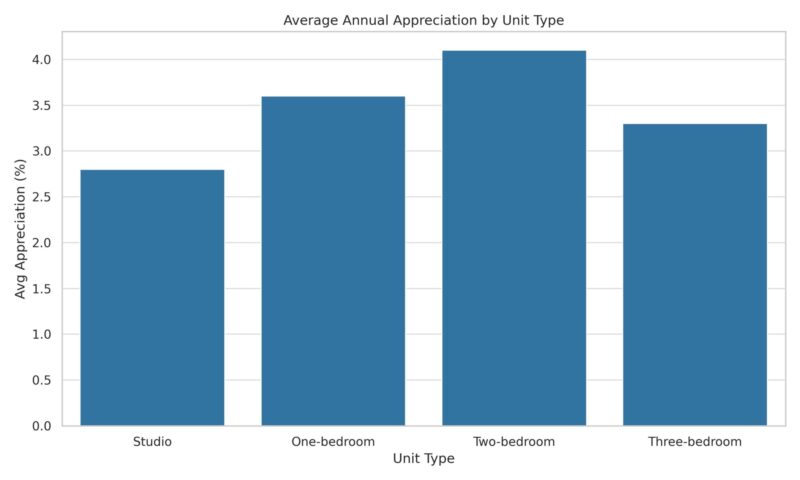
The two-bedroom’s versatility is a significant factor in its performance. It can accommodate a couple, a small family, roommates, or a work-from-home setup while remaining under the luxury tax threshold in many buildings.
“Two-bedroom condos hit the investment sweet spot,” Elika said. “They attract both end-users and renters and are resilient during downturns. You won’t get the explosive growth of a speculative micro-unit, but you’ll get durability.”
On the other hand, studios may lag in appreciation due to limited buyer demand and oversupply in new developments. Meanwhile, three-bedroom homes may appreciate steadily but require patient capital, as their buyer pool is narrower and more discerning.
Rental Income vs. Turnover RiskRental Income vs. Turnover Risk
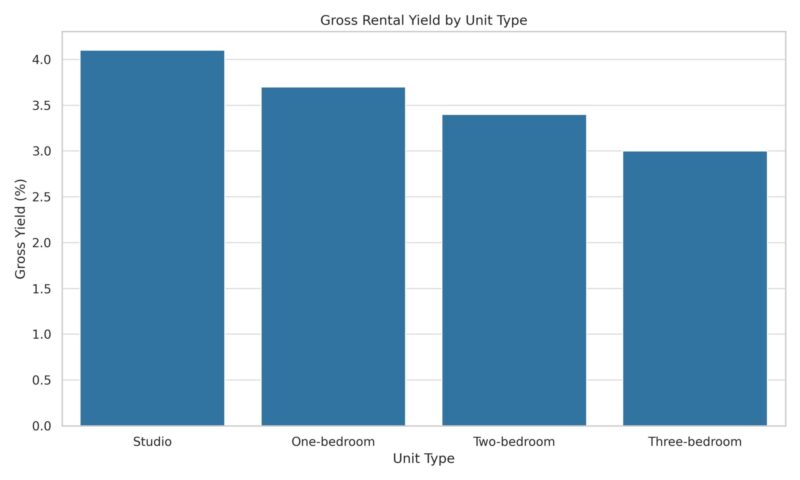
Rental yield is a top concern for investors looking to generate income. While studios typically command the highest gross rental yield, they also have higher turnover rates and more frequent vacancy cycles.
- Studio: ~4.1% yield
- One-bedroom: ~3.7%
- Two-bedroom: ~3.4%
- Three-bedroom: ~3.0%
“For pure income plays, studios might seem attractive, but they can be management-heavy,” Elika noted. Tenants stay one year, sometimes less, and wear and tear add up. That eats into your net return.”
One- and two-bedroom units strike a balance between yield and stability. Their tenant base, often professionals or couples, tends to renew leases and care for the units, reducing vacancy losses and capital expenses.
Although three-bedroom condos offer the lowest yield, they may appeal to families or high-income tenants seeking stability. These leases can stretch multiple years, providing peace of mind to investors more concerned with consistent occupancy than squeezing out the last basis point of return.
Exit Strategy: Resale Liquidity MattersExit Strategy: Resale Liquidity Matters
Profit isn’t just made at purchase, it’s realized at sale. In a market like New York, where timing and liquidity can make or break an investment, the ability to exit quickly is vital.
Smaller units, especially one-bedrooms, tend to sell faster due to affordability and mass-market appeal. Studios can linger on the market, particularly if they’re located in luxury buildings with high standard charges. Three-bedroom units may take longer to sell, but can attract a premium when the right buyer enters the market.
“If you want flexibility, one-bedrooms are the easiest to sell,” Elika said. “Two-bedroom homes are a close second, and tend to see bidding wars in a strong market. Studios require pricing finesse, and three-bedrooms demand patience.”
Foreign investors, pied-à-terre buyers, and wealth managers often look for two- or three-bedroom apartments in prime locations like the Upper West Side, Tribeca, or Brooklyn Heights. These units tend to attract a smaller but well-capitalized buyer pool.
Considering Broader RisksConsidering Broader Risks
Beyond unit size, several macroeconomic and regulatory factors can influence returns. Rising interest rates, changes to tax laws, rent regulations, and fluctuating buyer sentiment in the face of geopolitical instability can all shape outcomes. Investors should also account for increasing maintenance costs, assessments, and the possibility of future zoning or condo board restrictions.
“In New York, it’s not just what you buy, but when and how you manage it,” said Elika. “Markets correct. Interest rates shift. Investors who plan for these variables tend to outperform over time.”
Investor TakeawaysInvestor Takeaways
- Studios: Best for high-yield income strategies, but require active management and accept lower appreciation.
- One-bedrooms: Ideal for liquidity-focused investors with balanced returns and widespread tenant demand.
- Two-bedroom: Offers the most potent combination of appreciation, stability, and future resale value.
- Three-bedroom: Suited for long-horizon investors seeking prestige, stability, and strong end-user demand.
“In today’s market, the savvy investor isn’t just looking at cap rate,” Elika said. “They’re thinking three exits ahead: rentability, liquidity, and appreciation potential. In most cases, the two-bedroom is still the workhorse of the NYC condo market.”
Whether entering the market for the first time or expanding a portfolio, understanding bedroom segmentation gives you a strategic edge. In a city with over 3 million housing units and endless variables, savvy investors know that success isn’t just about buying in New York; it’s about buying smart in New York.